


Leslie Wingrowich: From Wheelchair to Warrior: The Woman Who Is Redefining MS Recovery
- imherewithmag

- Jul 11, 2025
- 7 min read
Updated: Jul 31, 2025

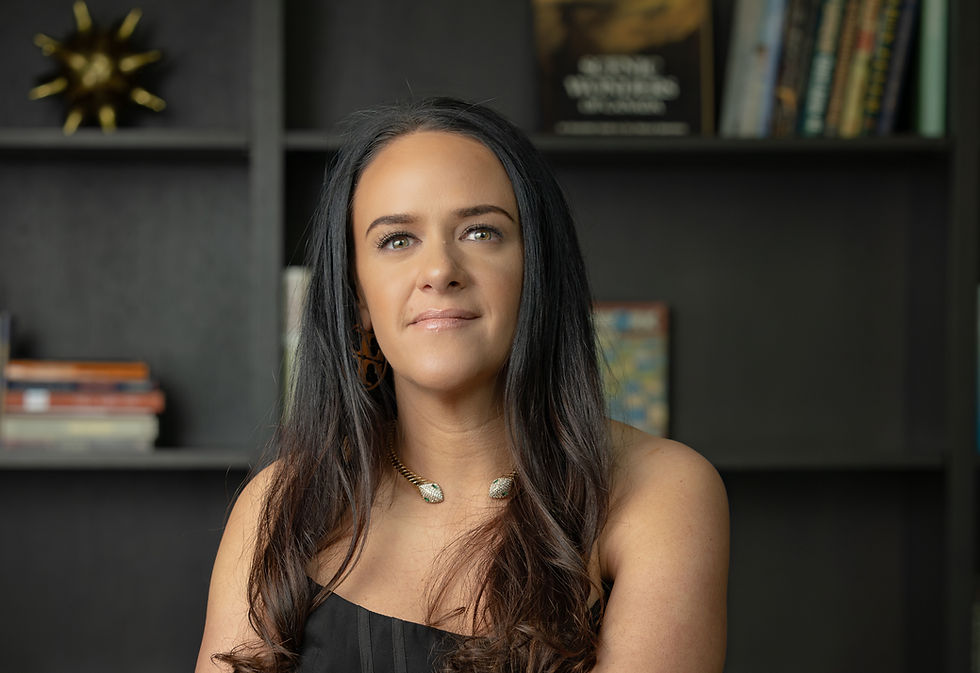
Photography by Victoria Givlin of Ascent Stories, Location: Monarch House Studios YYC
Once an ICU and trauma nurse, now an author and fearless guide—Leslie Wingrowich shares her proven path to MS recovery through her transformative course.
"I was told I’d never walk again. Today, I walk, I run, and I help others rise. Healing isn’t a dream—it’s a decision." — Leslie Wingrowich
Leslie Wingrowich is a Registered Nurse, author, and founder of The Live Like You’re Not Scared Healing & Transformation Course. After being diagnosed with Multiple Sclerosis and told she’d never walk again, Leslie defied all odds—reversing her symptoms through faith, focused research, and lifestyle change. Now, she’s helping others do the same through her transformative 15-module program, rooted in science, soul, and the belief that healing is always possible. She lives in Alberta with her husband and two daughters.

1. What inspired you to create this course for people with MS?
Honestly, I created the course I needed when I was in crisis. After being told I’d never walk
again, I felt abandoned by the system. I knew there had to be a better way—one that
included faith, science, nutrition, and real support. Once I began to heal, I knew I couldn’t
keep that knowledge to myself. I felt called to share it in a structured, step-by-step way that
anyone could follow—because no one should walk this road alone.
2. Can you share more about your personal journey with MS and how
you initially received your diagnosis?
Three months after giving birth to my second daughter, one morning, without warning, I woke
up paralyzed from the waist down. As a former ICU trauma nurse, I knew something was
seriously wrong. The diagnosis came fast: Multiple Sclerosis. I remember sitting under the
blinding LED lights of the MS clinic, looking at my husband, and thinking, “This can’t be it. I’m a mom to two little children. I won’t live my life like this. This is not going to be my story.”
In an instant, my entire world was turned upside down—and marked the beginning of a
complete rebuild.

3. What were some of the biggest challenges you faced during your recovery process?
The biggest challenges were emotional. I didn’t mourn the life I thought I’d lost—because I
knew I could get it back. What I had to come to terms with was the mountain ahead of me:
the long, uncertain journey of healing.
Physically, it was brutal. The pain was constant; the burning sensations were unbearable, the metallic taste in my mouth was enough to drive
anyone crazy. I had to regulate my body temperature carefully because even a small shift
would trigger violent episodes of vomiting and diarrhea, leaving me stuck in bed for days. My
right arm was useless—I couldn’t even wash my own hair. As someone who’s always on the
go, having my world come to a screeching halt was beyond frustrating. I had to be patient
while my body fought to get rid of the inflammation that prevented me from walking. Every single day took faith, strength, and letting go. Spiritually, I had to keep fighting to believe in
healing, even when the doctors and nurses around me said it wasn’t possible.
4. How did your background as an ICU trauma nurse influence your approach to healing?
My medical background made me question everything. ICU nurses are detectives at heart. I
wasn’t afraid to dig into research or challenge the standard protocols. I understood how the
body works—and how it can heal. But I also saw firsthand how often patients get lost in the
system. That’s why my approach is different. I combine the best of clinical knowledge with
holistic practices, rooted in both faith and lived experience.

5. What are the key components of your 15-module course that you believe are most effective?
It’s hard to choose just one, but I’d say the power is in the structure. Clients aren’t just
handed information—they’re walked through each step with clarity and intention. Detox,
faith, fasting, food, movement, mindset—each module builds on the last. It’s a full mind-body-soul reset that’s been carefully designed to create lasting change.
6. Why do you emphasize detoxing parasites, heavy metals, and infections in your program?
Because they’re often the root cause no one talks about. Infections like parasites and Candida can silently drive inflammation, especially in people with autoimmune conditions. I ignored this piece for a long time, and once I addressed it, everything changed. But it has tobe done safely. This isn’t about trendy cleanses—it’s a strategic, supportive process that protects the body while helping it heal.

Live Like You’re Not Scared: Unlock Your Potential
Do you feel as though you're stumbling through life? So did she! Introducing Leslie Wingrowich, a woman of extraordinary strength who faced the ultimate challenge head-on! Mere months after the birth of her second child, she awoke to the devastating discovery that the right side of her body was paralyzed! With her right arm and right leg suddenly rendered useless and a diagnosis of Multiple Sclerosis ringing in her ears - a crippling neurodegenerative disease - she defiantly rejected the neurologist's words “You will probably never walk again.”Once a beacon of strength as a former athlete, a beauty pageant standout, and a dedicated trauma nurse, Leslie unexpectedly found herself caught in a narrative that defied all expectations. In the depths of despair, Leslie grappled with crippling disability, obesity, and the isolating embrace of solitude. Reduced to crawling on the floor, she desperately tended to her two small children. Yet, in the midst of this daunting reality, Leslie's spirit refused to yield to defeat. From the ashes of adversity, she would rise, fueled by an indomitable will to rewrite her story.
7. How important is faith in your healing journey and in the course’s methodology?
Faith is the heartbeat of everything I do. There were moments I couldn’t move, couldn’t
parent - thank God I had my supportive husband to help, couldn’t even think—and all I could do was pray. My healing didn’t just come from protocols; it came from surrender, trust, and grace. In the course, I guide clients to connect with God in a personal way, because healing isn’t just physical—it’s deeply spiritual too.
8. What kind of results have you seen in your clients or students who have taken your course?
The stories have been incredible—reduced flares, increased energy, weight loss, improved
sleep, and so much emotional healing. Many of my clients have reversed the neuropathy in
their bodies and extremities, cleared their brain fog, and regained clarity and focus. But the
most powerful feedback is when someone says,
“I feel like myself again.” That’s when I know we’re truly changing lives.
9. Can you explain how real food and rest contribute to resetting the
immune system?
Our bodies want to heal—but they need the right fuel and environment. Real, unprocessed
food gives the immune system the nutrients and signaling it needs to calm inflammation. And
rest is where the magic happens. Without rest, your nervous system stays in fight-or-flight.
With rest, it finally gets a chance to repair. Food and rest aren’t “extras”
—they’re essential
medicine.

10. What advice would you give to someone who feels hopeless about their MS diagnosis?
Please don’t give up. I know it feels dark. I’ve been there—stuck in a wheelchair, scared to
dream. But there is hope. You have more power than you’ve been told, and your diagnosis
doesn’t have to define your future. One step, one choice, one prayer at a time—you will get
your life back.
11. How do you address the emotional and psychological aspects of living with MS in your course?
Constantly. We go deep. There’s journaling, reflection, prayer, and mindset coaching woven
into every module. I help clients process trauma, rebuild belief in themselves, and find
purpose again. Healing the body is important—but healing the heart is what sets you free.

12. What role does mindset play in reversing or managing MS symptoms?
Mindset is everything. If you believe you’re stuck, your body will respond that way. But when
you understand and believe healing is possible—when you expect recovery instead of fearing decline—it shifts your biology. The brain is powerful. And I teach clients how to make
it work for them, not against them.
13. How does your course differ from other MS treatments or programs available today?
Most programs focus on either medication or surface-level lifestyle changes. My course goes
deeper. It’s root-cause focused, faith-led, and designed by someone who’s actually lived it.
This isn’t theory—it's a lived transformation turned into a system that works.

14. Are there any success stories from your course participants that you’d like to share?
Yes! One of my clients messaged me and said,
“I went on a hike today—for the first time in
years.” That made me cry. Another man shared he is feeling his best in 17 years - he has 7
jars of parasites he has passed. These are the moments that remind me: my team and I are
changing lives, one body and soul at a time.
15. What are your future plans for expanding or developing additional support for those with autoimmune conditions?
I’d love to launch a podcast, build a full team of coaches, and eventually open a healing
retreat center. I want people to experience transformation not just online—but in community, in nature, and in deep connection with their bodies and the Creator or our world.
16. What inspired you to write Live Like You’re Not Scared , and how does your personal journey shape the narrative?
That book came out of my rawest moments. I wrote it as I healed—every lesson, every
breakthrough, every prayer. It’s part memoir, part guidebook, and 100% from the heart. I
wanted others to know they’re not alone, and that healing is real. I am living proof of that.
17. What message or core lesson do you hope readers will take away after reading your book?
That they were born to live boldly—not buried by fear or limitation. That no matter what
diagnosis or struggle they’re facing, there’s still purpose in their pain—and freedom on the
other side

Photography by Victoria Givlin of Ascent Stories, Location: Monarch House Studios YYC
18. Can you share how writing this book impacted your own healing and
personal growth?
Writing it helped me process everything I’d gone through. It was emotional—but it also
reminded me of how far I’d come. It helped me step into my role not just as a survivor, but as
a guide for others.
19. How do you think your story can empower others facing similar struggles with MS or life challenges?
Because I’m just a regular woman who refused to give up — I just made a decision to
believe in what was possible. And if I can do it, so can they.
20. What was the most challenging part of sharing such a vulnerable and transformative story in your book?
Being honest about the hard parts—my lowest moments, my doubts, my marriage struggles.
But I knew I had to share the whole truth, because that’s where people find themselves—and that’s where the healing begins.
Photography by Victoria Givlin of Ascent Stories, Location: Monarch House Studios YYC


Comments