


Advocating for Justice Through Film: A Cover Interview with Rowan Fisher, Executive Director of the Calgary Justice Film Festival

Updated: Apr 11
CANADIAN BUSINESS | FILM & TV | LEADERS IN FRAME
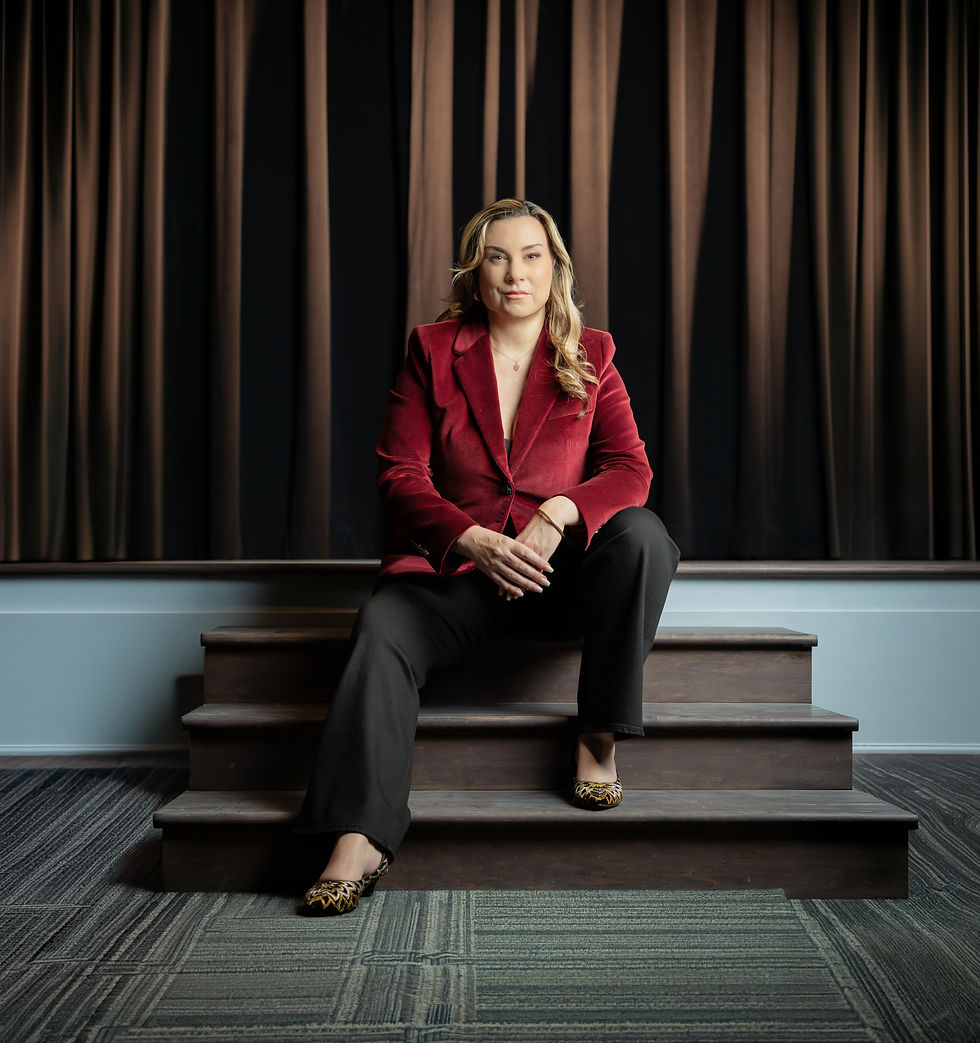
Rowan Fisher, Photography by Mory Peterson and Creative Director Roxanne Molnar

Calgary Justice Film Festival 2026
November 5th to 7th, 2026
Join us at The Confluence!
2026 Festival Information Coming Soon

ROWAN FISHER THE NEW EXECUTIVE DIRECTOR OF
THE CALGARY JUSTICE FILM FESTIVAL
Photography by Mory Peterson of Afterlight Studio
Creative Director Roxanne Molnar
Celebrity Stylist Crystal McKenzie
Clothing provided by Megan of Espy Experience
Cinematography by Andres Alejandro Galarza
Lighting and Camera Assistant Hannah Kob
Hairstyling and Makeup by Shantel Capri
Skin Care by Flawless Clinical in Inglewood
Hair Care by Tina Situ at The Beverly Salon
Ring from I-Hos Gallery
Location The Confluence YYC

LEADERS IN FRAME brings together a curated group of individuals shaping Alberta's businesses, creative, and community landscapes. A curated group of Calgary leaders are featured in this inaugural campaign.
ISSUE 21 CREATED BY ROXANNE MOLNAR
Edited by I'm Here With
OUR FIRST AND INSPIRED COVER STAR OF THE LEADERS OF FRAME IS ROWAN FISHER, THE NEW EXECUTIVE DIRECTOR OF THE CALGARY JUSTICE FILM FESTIVAL.
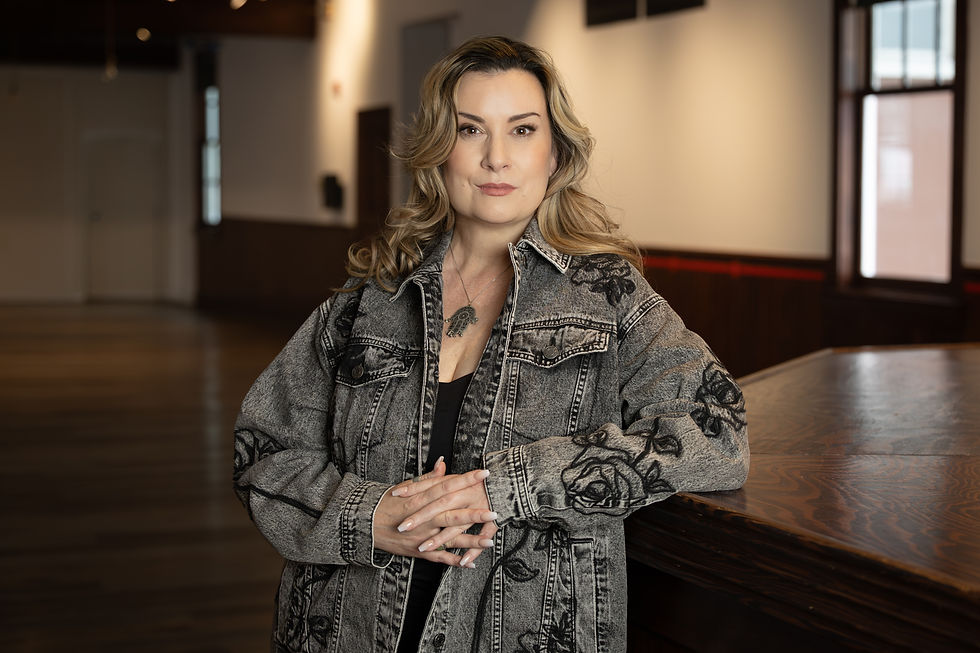
In a world where stories have the power to ignite change, few platforms are as impactful as the Calgary Justice Film Festival (CJFF). At its core is now Rowan Fisher, a dedicated leader whose diverse career, from acting to legal practice to community advocacy, embodies a commitment to justice and storytelling. The festival celebrated its 20th anniversary in 2025, and Rowan’s vision will shape an event that not only showcases compelling films, but also sparks conversations and inspires action.
Rowan Fisher’s journey is anything but conventional. She started her career as an actor in Calgary and Vancouver. She then completed an honours undergraduate degree in psychology, with a minor in law and society. She completed a law degree and became first an energy solicitor and later an immigration litigator, navigating complex legal landscapes across Canada and the UK before spending seven years in Saudi Arabia.
Her true calling emerged from a desire to create meaningful change beyond the practice of law; now guiding a movement that blends creativity with community resilience. Transitioning into community-focused leadership, she combines her global perspective with her passion for justice, working tirelessly to foster understanding through film.

As the Executive Director of CJFF, Rowan’s leadership will ensure that the festival remains barrier-free, thought-provoking, and deeply rooted in social impact. Her approach emphasizes clarity, inclusion, and action, values that guide the festival’s mission to use storytelling as a tool for social change.
Now permanently housed at The Confluence Historic Site & Parkland, each November CJFF features documentaries from around the world that explore themes of justice, human rights, and social equity. Every year, the festival curates a selection of films through a rigorous process, ensuring that each screening offers insight and inspiration.
CJFF is unique in its commitment to inclusivity. All screenings are fully accessible, free, and captioned, inviting diverse audiences to participate in vital conversations about issues impacting our communities and the world. Following each film, discussions with filmmakers, experts, and those with lived experience create opportunities for dialogue and reflection, turning viewers into active participants in social change. Additionally, the Peace Market, a showcase of local nonprofits, NGOs, artists, and vendors, further enriches the festival experience, connecting storytelling with real-world community efforts.

Rowan’s vision is clear; to use film as a catalyst for positive behavioral change, encouraging audiences to see themselves as part of a larger movement toward justice and equity. Developing the festival into a cultural landmark in Canada, continuing to diversify the voices being heard, and maintaining the festival’s mission to impact the community are front and centre of her leadership goals. Under her guidance, CJFF will strengthen as a space for learning, connection, and action. As the festival launches into its next 20 years, Rowan’s Fisher’s leadership is pivotal. Her dedication to amplifying marginalized voices and fostering community resilience ensures that CJFF will continue to inspire audiences and create meaningful impact.
With Rowan at the helm, the festival is more than just a screening event, it is a powerful movement for change through storytelling.
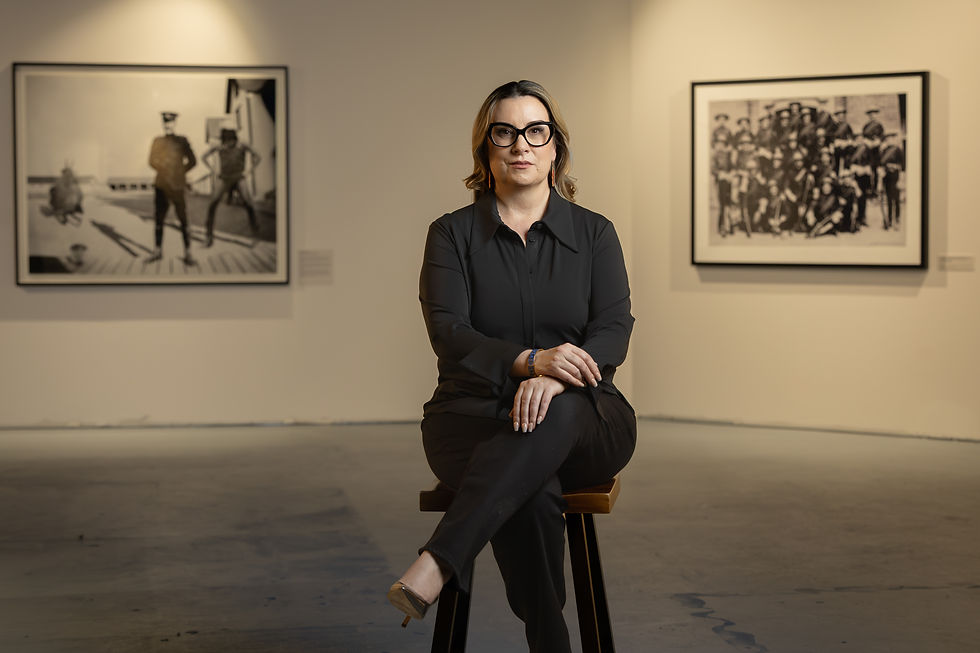
"Leading CJFF reflects my deepening commitment to justice beyond legal practice. As a lawyer, I frequently complex issues, and it is a powerful tool to broaden awareness and empathy."
"I hope attendees leave CJFF with a deeper understanding of justice issues, inspired curiosity, and a sense of connection, both to the stories they’ve seen and to the people and organizations working toward positive change here in our community. Ideally, the festival experience encourages reflection on societal challenges and one’s own role in community life, sparking conversations, volunteerism, advocacy, and creative engagement beyond the screenings. It’s about shifting perspectives, broadening knowledge, and empowering individuals to act in ways aligned with justice and equity. " shared Rowan.

Rowan's transition to becoming the Executive Director was rooted in a belief that storytelling is a powerful tool to foster awareness and empathy. As a lawyer, Rowan frequently grappled with complex issues, but she realized that film could serve as an even more compelling medium to reach broader audiences. Her involvement deepened over time, especially as a Board member responsible for programming and selecting speakers. This experience revealed to her how CJFF’s alignment with core values human rights, social equity, and inclusive dialogue made it a natural platform to channel both her professional expertise and her passion for community empowerment. For Rowan, the festival became a unique way to leverage storytelling to educate, engage, and inspire social action, extending the reach of legal advocacy into the realm of cultural dialogue.
The festival’s story began in 2005, originally known as the Marda Loop Justice Film Festival. Its founding mission was to bridge the gap between community awareness and action on justice issues through documentary film. The idea was simple yet profound: create a space where audiences could witness real-world struggles for human and environmental rights and connect with others who cared deeply about these issues.
Over the years, CJFF grew beyond its initial scope. By 2021, it was re-branded as the Calgary Justice Film Festival to reflect its expanding reach and broader focus on global issues. The festival’s evolution was complemented in 2025 by achieving charitable status, reinforcing its commitment to social good. Throughout its journey, CJFF has stayed true to its core mission, fostering discussion, inspiring positive change, and increasingly integrating frameworks like the UN Sustainable Development Goals to ensure relevance and impact.

Photography by Mory Peterson and Creative Director Roxanne Molnar
Rowan Fisher’s primary goals for CJFF in 2025 are ambitious yet rooted in community values. Celebrating its 20th anniversary, the festival aims to expand accessibility, increase audience engagement, and maintain its influence. Rowan envisions showcasing more documentaries throughout the year both local and global that reflect pressing issues and promote inclusive dialogue. Building stronger relationships with Indigenous filmmakers and amplifying their stories is a top priority.
She also emphasizes the importance of educational outreach, partnerships with other festivals and industry organizations such as CIFF, CUFF, CSIF, and DOC Alberta, and forging sustainable collaborations with nonprofits. The year-round engagement through programs like justREEL, which brings justice films and discussions into neighborhoods outside the festival’s main window, will play a crucial role. Ultimately, Rowan sees CJFF 2026 as a celebration of decades of community impact, with a focus on storytelling, collaboration, and social change that will endure into the future.
The festival’s film selection process is both rigorous and mission-driven. Submissions are received on FilmFreeway from across Canada and around the world, evaluated for their relevance to justice, human rights, environmental sustainability, and social equity. A dedicated programming committee reviews these submissions from January to May, providing Rowan with a ranked list to craft the festival lineup. Films must be non-fiction and resonate with contemporary issues, aligning with the UN Sustainable Development Goals. Diversity of perspectives and voices is prioritized to expand understanding of justice themes. The goal is to select films that not only educate but also catalyze conversation and inspire action ensuring each story contributes meaningfully to systemic change.

CJFF doesn’t just screen films; it creates spaces for meaningful dialogue. After each screening, facilitated discussions with filmmakers, experts, or those with lived experience encourage audiences to grapple with complex issues, ask questions, and deepen their understanding. These conversations aim to move beyond passive viewing, inspiring attendees to reflect, challenge assumptions, and consider how they can contribute to change.

Seen in issue 20
The festival also hosts opportunities for community involvement sharing insights, connecting with local nonprofits at the Peace Market, and exploring avenues for advocacy. These formats are designed to prompt not just reflection but also tangible steps toward real-world impact.
A cornerstone of CJFF’s ethos is accessibility. By offering free screenings, the festival invites a diverse and inclusive community to participate without financial barriers. This approach ensures students, lower-income community members, and those new to social justice cinema can engage with vital issues. Physical accessibility further broadens reach, fostering a shared culture of learning and empowerment. Rowan believes that removing barriers nurtures community ownership and encourages ongoing dialogue and action.
Throughout its history, CJFF has created countless memorable moments that highlight its profound impact. Rowan recalls one particularly powerful instance: after a screening about an international environmental justice issue, local experts addressed the audience with a discussion. A young attendee, inspired by the film, stood up, took a deep breath, and, voice trembling but determined, shared her resolve to volunteer with a grassroots organization she had discovered at the Peace Market.
Another poignant moment involved a post-film discussion with a person who shared the lived experience at the heart of the story. As he struggled to speak through emotion, a family member of the film’s subject quietly stepped forward, wrapping her arms around him in a silent gesture of support. The entire theater fell into a hush, a collective space of grief, empathy, and connection. These moments exemplify CJFF’s ability to spark genuine community engagement where stories inspire not just awareness, but heartfelt community bonds and action.
The Peace Market enriches the festival by creating a vibrant hub where local nonprofits, NGOs, and community groups showcase their missions. It transforms storytelling into tangible action visitors learn about causes highlighted in the films, engage directly with organizations, and forge relationships that extend beyond the screenings. Local vendors and artists contribute to the lively atmosphere, fostering cultural expression and solidarity. Rowan sees the Peace Market as a vital bridge connecting cinematic inspiration with real-world activism.

It’s a space where community members can learn, participate, and take steps toward positive change, making the festival a dynamic gathering for connection and collective effort. The landscape of social justice filmmaking has become increasingly diverse, intersectional, and interconnected globally. Filmmakers explore complex themes from environmental crises to systemic inequities with nuanced storytelling and personal narratives that resonate widely.
The rise of digital media and online platforms has amplified voices, while the pandemic accelerated hybrid models that combine in-person and virtual engagement.
CJFF has adapted by emphasizing inclusive programming that reflects these trends. Its selection criteria now highlight global perspectives and lived experiences, ensuring the festival remains relevant and impactful. Artistic approaches have matured, foregrounding personal stories that demand empathy and action. Rowan notes that the festival continues evolving its strategies to stay at the forefront of this dynamic field.
Rowan believes storytelling, especially through documentary film, is a profound catalyst for change. Films illuminate invisible struggles, humanize abstract issues, and inspire critical reflection. In today’s media-driven world, documentaries about justice generate awareness, foster empathy, and motivate action.
They serve as educational tools and rallying points for advocacy, community dialogue, and collective efforts. As distribution channels diversify, the transformative potential of film continues to grow, building solidarity and encouraging audiences to translate viewing into tangible commitments for social justice.
CJFF actively amplifies marginalized voices by prioritizing films that center stories often excluded from mainstream narratives. The festival’s selection process emphasizes diverse creators and communities, ensuring broad representation. Facilitated discussions provide inclusive spaces where multiple perspectives can be shared and heard. Partnerships with organizations and cultural groups further foster accessibility and participation, making inclusivity a guiding principle in programming and outreach. Rowan emphasizes that elevating marginalized voices is essential to fostering a more just and representative community.
Like any organization, CJFF has faced hurdles—securing sustainable funding, adapting during the pandemic, and balancing growth with its core mission. Rowan and her team have responded by strengthening community partnerships, diversifying sponsors and donors, and exploring hybrid and year-round initiatives like justREEL. Volunteer engagement and collaboration with nonprofits have been crucial in maintaining free admission and amplifying impact. Flexibility, resilience, and a community-centered approach have been vital in navigating these challenges, ensuring the festival’s continued success and relevance.
CJFF’s collaborations extend across the community working with nonprofits, NGOs, filmmakers, and residents through partnerships, panel discussions, workshops, and outreach. These endeavors deepen the festival’s social impact by connecting audiences with organizations working on the issues portrayed in the films. Filmmakers engage directly with viewers, sharing insights and context, while community partnerships support educational and ongoing initiatives that sustain engagement beyond the festival itself.
Ultimately, Rowan hopes that festival-goers leave with a richer understanding of justice issues, inspired curiosity, and a sense of connection to the stories, to the community, and to the ongoing work of social change. She envisions the festival as a catalyst for reflection prompting conversations, volunteerism, advocacy, and creative engagement.
Her goal is to empower individuals to see themselves as active participants in building a more just and equitable society.
Follow Rowan on Instagram
www./justicefilmfestival.ca
View the print and digital magazine on Magcloud

You can shop Rowan's magazine look at Espy Experience in Inglewood
Photography by Mory Peterson of Afterlight Studio
Creative Director Roxanne Molnar
Cinematography by Andres Alejandro Galarza
Reporter Jill Maria Mateas
Location The Confluence YYC


Comments